
What To Do If a Pipe Boot Splits in Winter
Short answer: A cracked pipe boot lets water follow the pipe and drip inside. Protect the room, document the area, and schedule a small repair. In winter, we stabilize first, then complete the permanent fix in the next dry, safe weather window.
About us: Eastern Roof Technologies serves Lake Norman and Greater Charlotte with leak tracing, repairs, and replacements when roofs age out. Start here: Roof Repair.
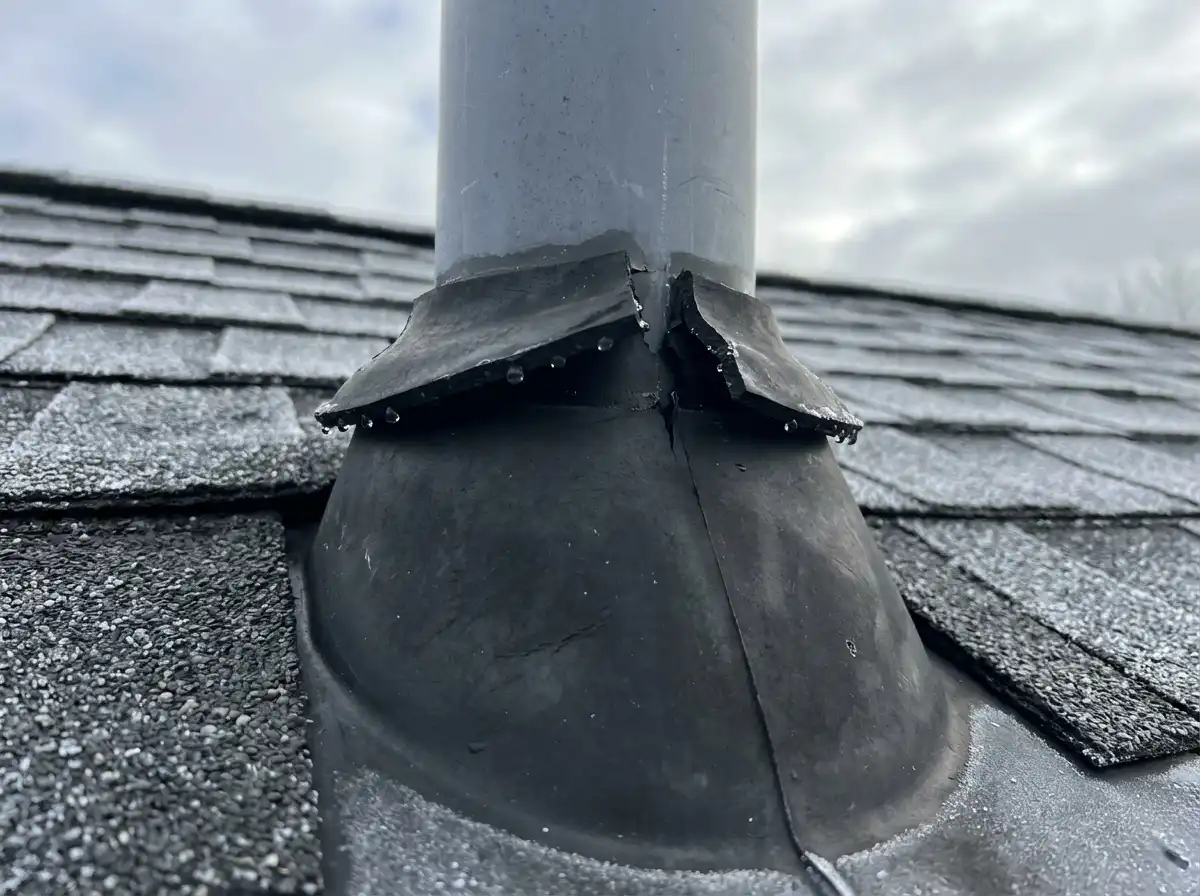
How to spot a split pipe boot
- Ceiling stain below a bathroom or laundry: Often near a plumbing wall or directly under the roof penetration.
- Drip on cold mornings: Splits widen when rubber stiffens in cold weather.
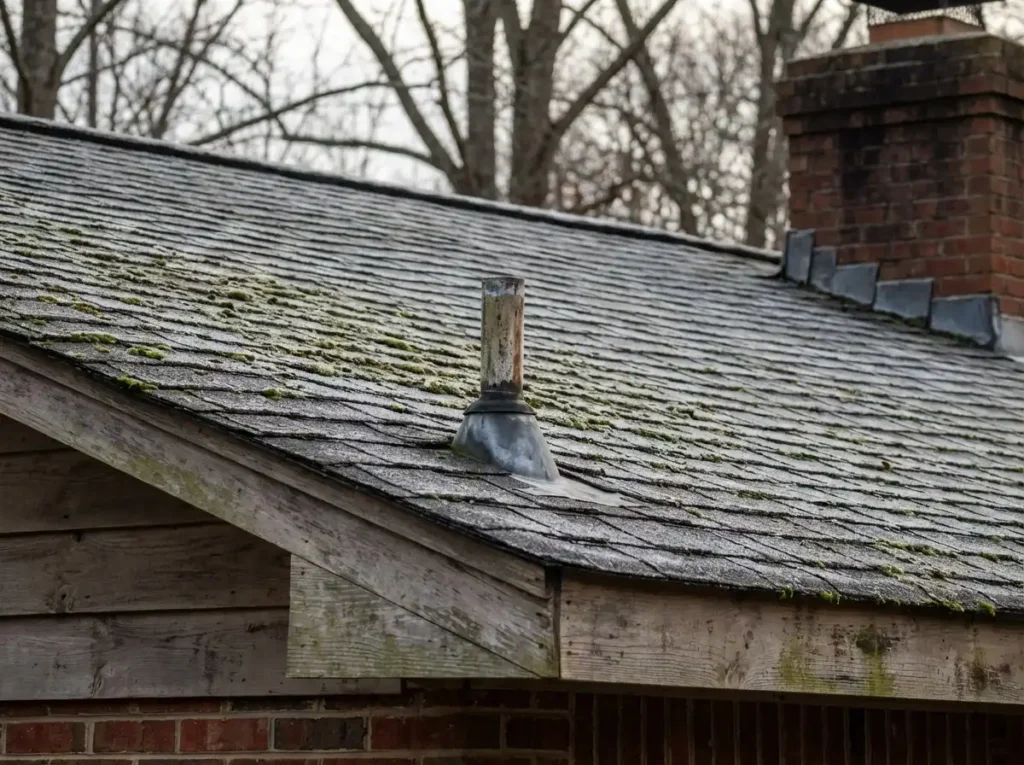
- Outdoor clue: From the ground you may see a vent pipe near the stain location. The rubber collar around that pipe is the boot.
First steps inside the home
- Move electronics and furniture. Lay towels and set a bucket where needed.
- If a ceiling bubble forms, place a bucket under it and gently relieve the lowest point so water drains in a controlled way.
- Take clear photos of the stain and a wide shot of the room. If safe, grab a ground-level photo of the roof area where the vent pipe exits.

Why boots split more in winter
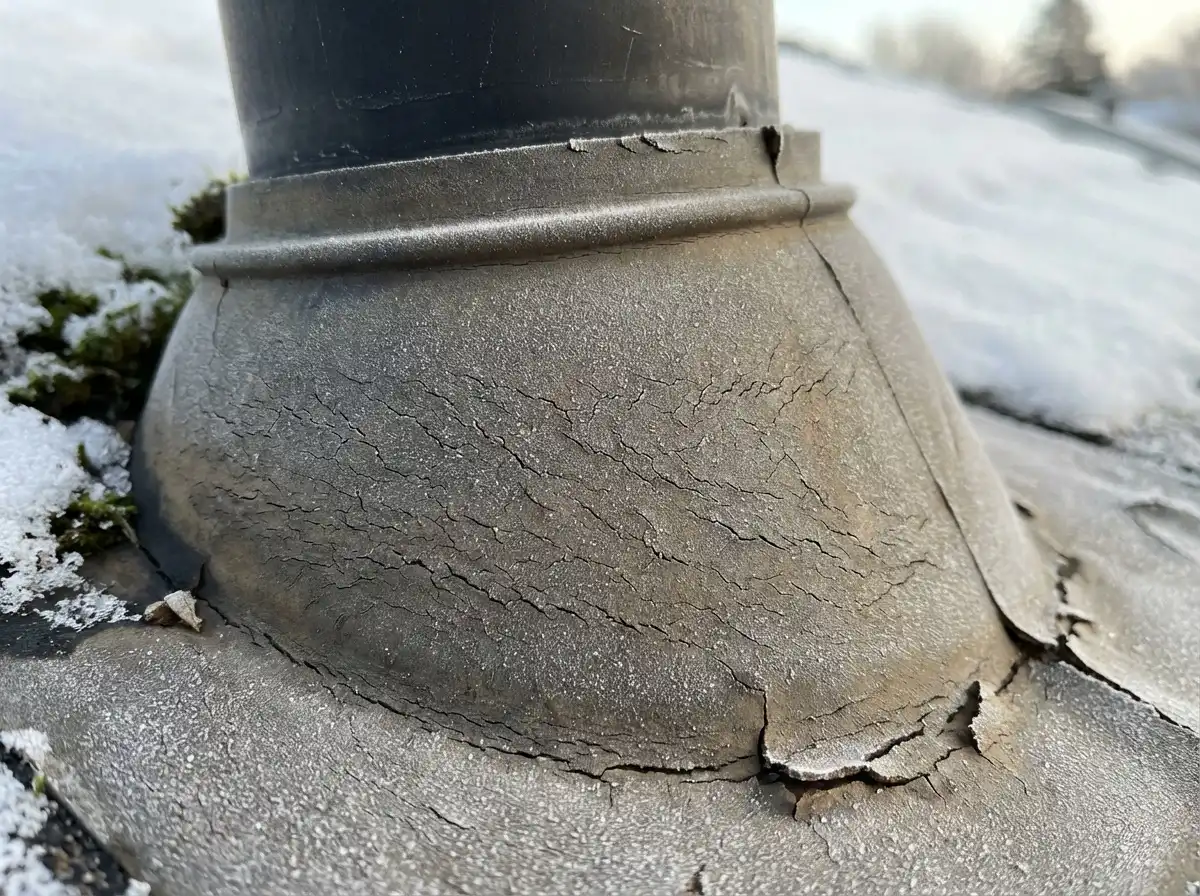
- Cold-stiff rubber: Older neoprene collars crack at the top where they bend around the pipe.
- UV and age: Sun and time dry the material, then cold makes the split appear overnight.
- Wind-driven rain: Water finds the crack and runs down the pipe into the attic or wall cavity.
What a proper repair includes
- Remove the failed collar and inspect the flange and surrounding shingles.
- Install a new boot or repair collar sized to the pipe, set under the upslope shingles with correct laps.
- Verify underlayment laps so water sheds over every layer, not under it.
- Hand-seal where required and check nails are placed in the correct zone.
Temporary stabilization between storms
- Short-term cover or an auxiliary collar to stop drips until conditions are dry enough for permanent work.
- Photo set of the pipe, collar, and surrounding shingles so you see the cause clearly.
What not to do
- Do not smear caulk around the pipe and call it done. Sealant alone shrinks and cracks.
- Do not screw metal plates over shingles. New holes create new leaks.
- Do not ignore a small drip. Wet insulation and stained drywall cost more than a simple boot swap.
When a boot leak points to a larger plan
- Multiple cracked boots: If several are failing, update them as a set.
- Brittle shingles: If shingles crack when lifted for the repair, the roof may be near end of life. Compare options here: Roof Replacement.
- Recurring winter stains: We also check ventilation so condensation is not adding to the problem.
Next steps
- Think it is the boot? Book a quick visit: Shingle Roof Repair.
- Prefer to talk it through first? Contact Eastern Roof Technologies and we will outline a simple, no-pressure plan.
Frequently asked questions
Can I just add a repair collar over the old boot?
Often yes if the flange is sound and shingles are in good shape. We still verify laps and nail placement so water sheds correctly.
Will a bead of caulk stop the leak?
Not reliably. Caulk is a temporary patch at best. The right fix is a properly lapped boot or collar sized to the pipe.
How fast can this be repaired in winter?
Boot swaps are quick once surfaces are dry and safe to work on. We stabilize first if rain is in the forecast, then finish the permanent repair on the next dry day.
What size boot do I need?
It must match the pipe diameter and roof pitch. We carry common sizes and verify the fit on site.
Could this be condensation instead of a leak?
Sometimes. If stains show after very cold nights without rain, we check attic airflow. When in doubt, we inspect and document both the boot and the attic so you have a clear answer.