
Emergency Roof Repair After a Storm: Hail and Wind Damage (2026 Guide)
Storm season in North Carolina does not play around. Hail can bruise shingles and crack vents. Wind can lift materials just enough to let water in. If you wait, a small problem can turn into soaked insulation, stained ceilings, and rotten decking.
This 2026 guide breaks down what to do right after a storm, how to spot hail and wind damage, and what emergency roof repair should look like when speed matters. If you’re in the Lake Norman area, Eastern Roof Technologies is ready to help you protect your home and get a clear plan in place.
After a storm, your roof may look “fine” from the ground and still be damaged. The goal of emergency roof repair is not to make everything perfect in one visit. It is to stop active leaks, stabilize weak areas, and prevent the damage from spreading.
- Stops water fast: Even a slow leak can soak wood and insulation.
- Prevents bigger repairs: Early fixes can reduce the chance of decking, drywall, and mold issues.
- Protects your home’s structure: Wind-lifted shingles and damaged flashing can expose vulnerable seams.
- Creates a paper trail: Good documentation helps if you’re filing an insurance claim.
What to Do Immediately After Storms
If you suspect roof damage, these steps help you stay safe and protect your home while you wait for a professional inspection.
- Stay off the roof. Wet shingles and hidden soft spots are dangerous.
- Look for interior warning signs. Check ceilings, attic spaces, and around chimneys, skylights, and vents for water stains or dripping.
- Reduce interior damage. Put a bucket under drips, move valuables, and use towels to protect flooring.
- Take photos. Grab wide shots of the exterior, then close-ups of anything obvious like missing shingles, dented vents, downed tree limbs, or damaged gutters.
- Call a local roofing contractor quickly. If there is active leaking, emergency tarping can be the difference between a manageable repair and a major rebuild.
Hail Damage Roof Repair
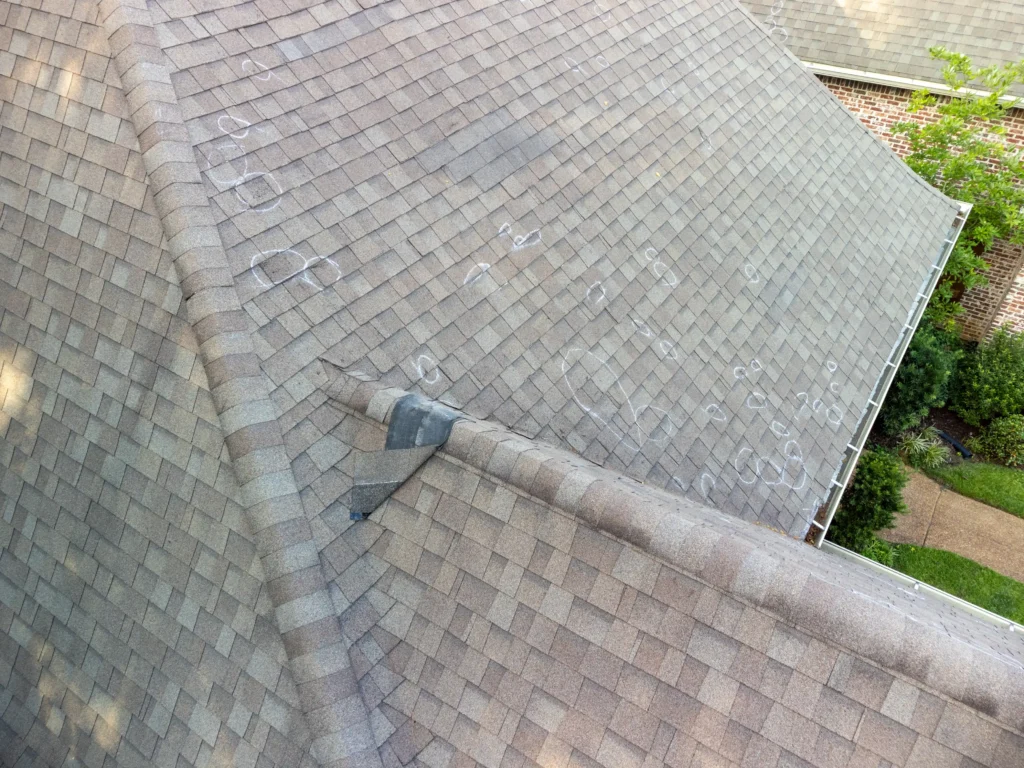
Hail damage is not always dramatic. A roof can take a hit and still look “normal” from the street. The problem is that hail can weaken shingles, knock granules loose, and create small fractures that become leaks later.
Common Signs of Hail Damage
- Granules collecting in gutters or at downspout exits
- Dark “bruise” spots or dents on shingles
- Cracked or broken shingle corners
- Dented metal vents, flashing, drip edge, or gutter caps
- Soft spots that feel spongy underfoot (this is for a professional to check safely)
Why Hail Damage Often Turns Into Leaks
Shingles are designed to shed water. When hail knocks off granules or cracks the shingle mat, the roof can start absorbing damage from sun and rain at a faster rate. That is when you get premature aging, exposed nail lines, and water finding its way into seams.
How Eastern Roof Technologies Handles Hail Damage
- Thorough inspection: We check shingles, ridge caps, flashing, vents, pipe boots, valleys, skylight areas, and roof-to-wall transitions.
- Photo documentation: Clear photos and notes that help support your next steps.
- Targeted shingle repair: Replace damaged shingles and address exposed fasteners when appropriate.
- Sealing and waterproofing details: We focus on the areas where hail damage often becomes a leak later.
Wind Damage Roof Repair
Wind damage often shows up as lifting, tearing, or missing materials. Even if only a small section is affected, wind can break the seal between shingles and create a pathway for water during the next rain.
Common Signs of Wind Damage
- Missing shingles or ridge caps
- Lifted, curled, or creased shingles
- Loose or bent flashing near chimneys and walls
- Exposed nails or fasteners
- Debris impact marks from branches or flying material
How Eastern Roof Technologies Handles Wind Damage
- Secure loose materials: We stabilize lifted shingles, flashing, and vulnerable edges when possible.
- Repair and reinforcement: We repair the damaged section and reinforce the weak points that commonly fail in the next storm.
- Emergency tarping: When there is active leaking or exposed decking, tarping helps prevent water intrusion while permanent repairs are scheduled.
Emergency Tarping and Leak Control
Emergency tarping is a temporary protection step. It is meant to keep water out, reduce interior damage, and buy time for permanent repairs. If your roof is actively leaking or has missing materials, tarping is often the smartest first move.
- When tarping is needed: Missing shingles, exposed underlayment, visible holes, storm debris damage, or active leaks.
- What tarping helps prevent: Soaked insulation, ceiling collapse in severe cases, wood rot, and ongoing water damage during additional rain.
- What comes next: A permanent repair plan based on what the inspection shows.

Insurance Claims: How We Help
Many storm repairs involve insurance, especially after hail and high-wind events. The key is documentation and a clear scope of work. Eastern Roof Technologies can provide inspection findings and photos so you have solid information for your claim process.
- Documentation support: Photos and notes of storm-related damage.
- Repair clarity: A straightforward explanation of what needs to be repaired now versus what may need replacement.
- Practical next steps: Guidance on how to avoid delays and protect your home while the claim is in motion.
One-Year Workmanship Warranty on Roof Repairs
Storm damage repairs should hold up. Eastern Roof Technologies backs roof repair work with a one-year workmanship warranty, so you can feel confident that the repaired area was handled the right way.
Why “Waiting It Out” Usually Costs More
A lot of homeowners wait because they do not see water right away. In real life, storm damage often starts small and gets worse with each rain and temperature swing. If you take action early, you are more likely to keep the repair focused and affordable.
Need Emergency Roof Repair?
If you suspect hail damage or wind damage, do not wait for the next rain to confirm it. Eastern Roof Technologies can inspect the roof, document the damage, and make the right repairs to protect your home.
Contact Eastern Roof Technologies to schedule emergency roof repair and get your roof stabilized after the storm.
FAQs: Emergency Roof Repair After Storm Damage
How soon should I get my roof inspected after a hail or wind storm?
As soon as you can, especially if you see missing shingles, dents on vents, or any interior water staining. Quick inspections help you prevent follow-up damage and document the condition while it’s fresh.
Can my roof be damaged even if I don’t see leaks?
Yes. Hail can weaken shingles without immediate leaking, and wind can lift shingles just enough to break seals. Leaks often show up later after the next rain.
What parts of the roof are most likely to fail after a storm?
Common weak spots include flashing, valleys, ridge caps, pipe boots, skylight areas, chimney transitions, and roof edges. These areas handle the most water flow and wind pressure.
Is emergency tarping a permanent fix?
No. Tarping is temporary protection to keep water out and prevent interior damage. Permanent repairs should follow after a proper inspection.
What should I document for an insurance claim?
Take clear photos of any missing shingles, debris impact, dented vents, damaged gutters, and interior water staining. Save any storm-related receipts, such as temporary water cleanup materials, if applicable.